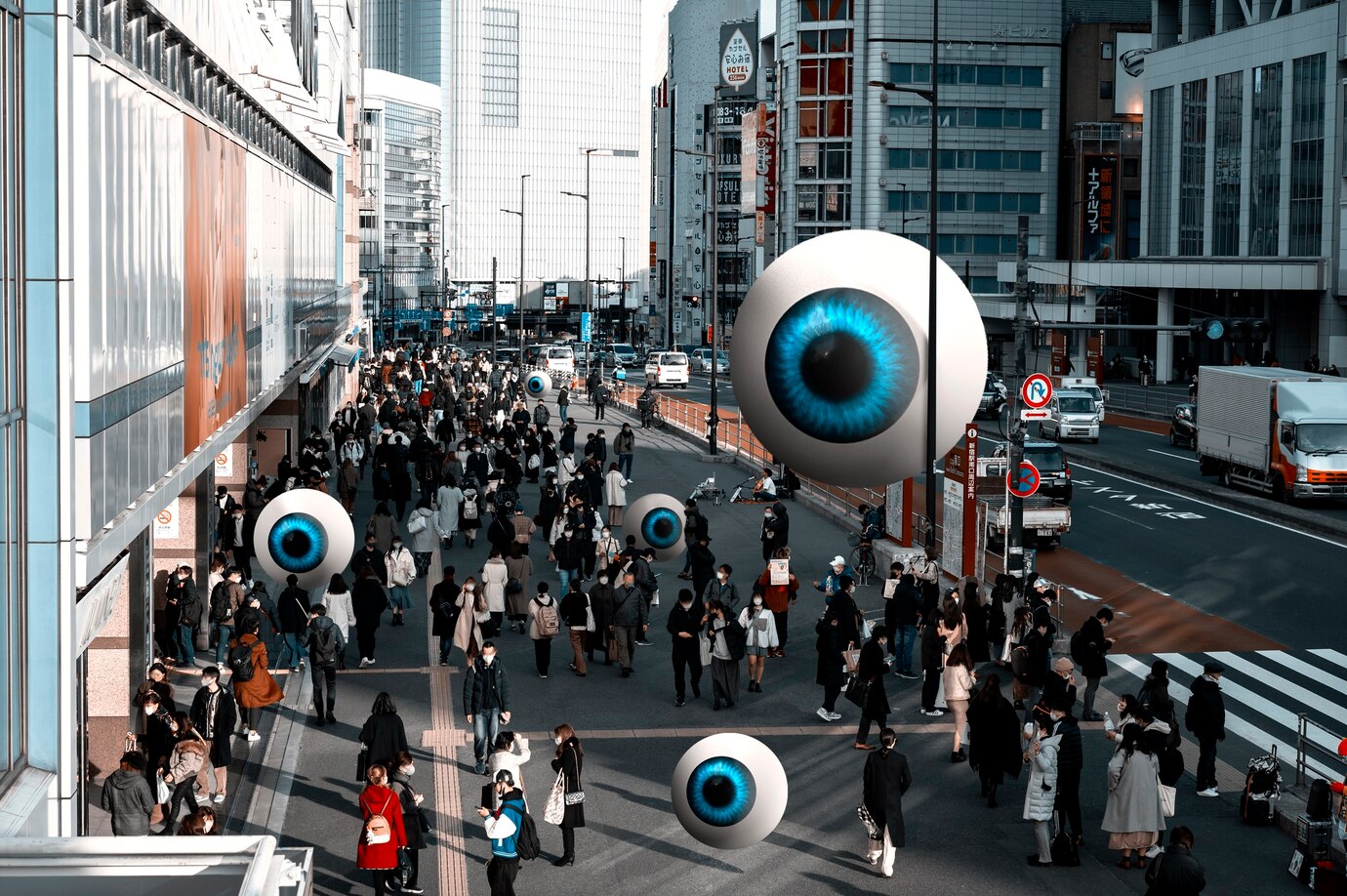
Imagine waking up one day to find out that everything you’ve ever said, searched, or shared online has been recorded, analyzed, and sold to the highest bidder. Sounds like a dystopian nightmare, right?
Unfortunately, it’s not fiction—it’s our reality. We live in a world where your personal thoughts, conversations, and digital footprints are constantly monitored, all in the name of “personalization” and “convenience.”
Even more frightening is the way your personal information is used. The surveillance capitalists want you to believe it’s just about your buying habits, but it goes much deeper than that. That secret dossier about you is about your beliefs, affiliations, and opinions, because that information is most profitable for them. They use it to push you into groups and echo chambers where advertisers of miracle diet supplements, investment schemes, political causes, etc., etc. pay the highest rates.
The modern internet is an omnipresent force in our lives, seamlessly integrating with our personal and professional spaces. But as convenient as it seems, lurking beneath the surface is a grim reality: privacy, once a fundamental right, has been eroded to an alarming extent. Tech giants—collectively referred to as Silibandia—have built empires worth trillions by commodifying personal data. Their business model thrives on mass surveillance, targeted advertising, and the systematic exploitation of users’ private lives.
The consequences are far more disturbing than most realize. Studies have shown a direct correlation between social media-driven surveillance and mental health crises. Cyberbullying, algorithmic manipulation, and data-driven targeted content have contributed to rising anxiety, depression, and even suicides. A recent study found that excessive social media exposure—enabled by invasive tracking—has led to a 62% increase in teenage depression over the last decade. Meanwhile, identity theft and financial fraud stemming from data breaches cost victims billions of dollars annually. The question is: is privacy truly dead, or can we still fight back against these digital overlords?
How Silibandia Exploits Your Privacy
Silibandia corporations dominate the internet economy and have perfected the art of data collection. Under the guise of “personalized experiences,” they extract massive amounts of data—your browsing history, social interactions, purchases, location, and even biometric information.
These companies track users across multiple platforms, integrate data from third-party sites, scan emails, record conversations, and analyze behavioral patterns to create detailed user profiles. They use sophisticated algorithms to manipulate content, pushing tailored ads and shaping public perception, all while amassing an unprecedented level of surveillance power.
The reality is clear: Silibandia is the modern-day surveillance state, profiting from your most intimate data without your explicit knowledge or consent. But if these corporate behemoths have already amassed so much control, do we even stand a chance of reclaiming our privacy?
The Solution Was Hiding in Plain Sight
It may seem like a losing battle, but the truth is, the solution has been staring us in the face for decades. The key to regaining control over our data lies in old but proven cryptographic technologies, particularly ID-PKI (Identity-Based Public Key Infrastructure) and Asymmetric Cryptography (AC).
Understanding ID-PKI and Asymmetric Cryptography
ID-PKI is an authentication system that provides real security, privacy, and accountability without relying on centralized authorities controlled by Silibandia. The beauty of ID-PKI is that it enables individuals to verify their identity securely while preventing unauthorized tracking and data harvesting.
Asymmetric Cryptography, which powers ID-PKI, uses a pair of keys—one public, one private—to enable secure communication and authentication. While Silibandia claims that such encryption is computationally expensive, the reality is that today’s smartphones and computers have more than enough power to handle these processes effortlessly.
Why Haven’t These Solutions Been Implemented?
The reason is simple: implementing ID-PKI and AC-based authentication would dismantle the surveillance capitalism model. These technologies would prevent companies from indiscriminately collecting data, cutting off the primary revenue stream of Silibandia. They want you to believe that privacy is a relic of the past when, in fact, it has always been within reach.
How ID-PKI Can Protect You
- Eliminates the Need for Passwords – No more insecure passwords that can be phished or stolen.
- Prevents Data Harvesting – Users authenticate without revealing personal information.
- Secures Communications – Strong encryption ensures messages remain private and untampered.
- Reduces Fraud & Phishing – Malicious actors can’t impersonate legitimate users without cryptographic proof.
- Empowers Users – Individuals take back control of their identities rather than relying on Silibandia intermediaries.
The Future of Privacy: Reclaiming Control
Silibandia wants you to believe that privacy is dead, but the truth is, it has simply been buried under corporate interests. Mass surveillance is not an inevitability—it is a choice made by businesses that profit from our digital footprint. The good news? We have the tools to resist.
Authenticity SHIPS™ is one such initiative that brings these solutions to the forefront. By leveraging ID-PKI authentication and asymmetric cryptography, SHIPS aims to dismantle the broken cybersecurity landscape and put control back in the hands of individuals. It promises real security, real privacy, and real accountability—without feeding into the surveillance economy.
The battle for privacy isn’t over. The tools to secure our digital lives have existed for decades, hidden in plain sight. It’s time we stop relying on Silibandia to “protect” our data and take matters into our own hands. The internet may not be broken, but the way we use it is. The solution? Reclaim control, encrypt everything, and refuse to be a product.
Privacy isn’t dead—it’s waiting for you and me to revive it.
Leave a Reply